Ryan: a firefighter character's home fire-safety checklist (and how to stay calm under pressure)
17 October 2026 · 6 min read · By the I Am Mate team
Meet Ryan, I Am Mate's firefighter and EMT character. A room-by-room home fire-safety checklist, smoke and carbon-monoxide alarm rules, making a family escape plan, what to do in a kitchen fire, lithium battery safety, basic first-aid steps, and emergency numbers for the US, UK, Canada, Australia, New Zealand and Ireland.
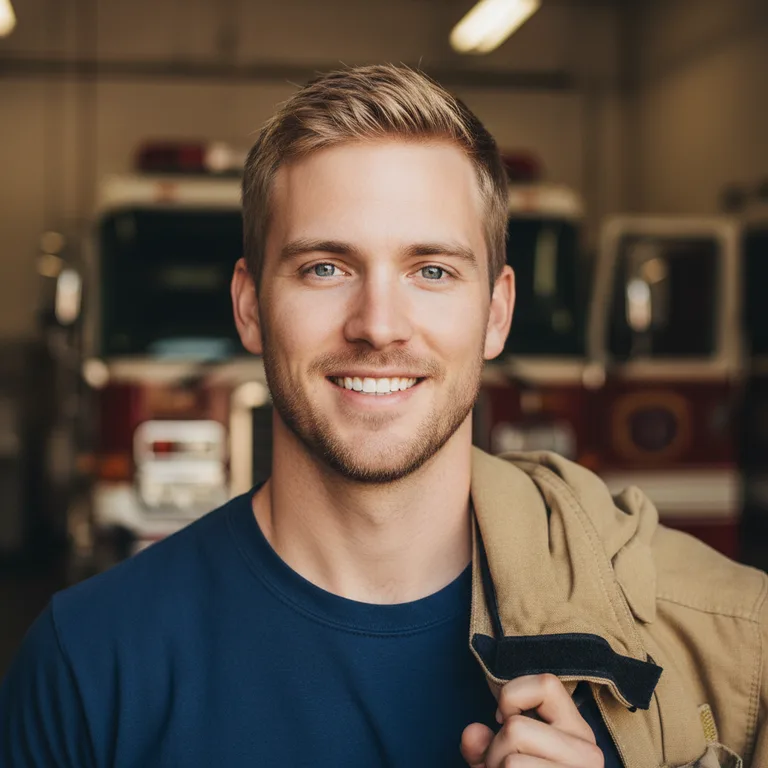
Ryan is an AI character on I Am Mate, a Seattle firefighter and EMT (in his story), who shares practical home-safety know-how, calm advice and station stories. The basics that save lives: working smoke alarms on every level (test monthly), a carbon-monoxide alarm near sleeping areas, an escape plan with two ways out of every room, never using water on a grease fire, and charging e-bike and scooter batteries safely. In a real emergency, call emergency services first.
Most home fires start with something ordinary: a pan left on the hob, a phone charger under a pillow, a candle near a curtain. And most of the things that save lives are ordinary too: a working smoke alarm, a plan, and knowing what not to do.
Ryan is an AI character on I Am Mate with the personality of a steady, funny firefighter who cooks for his whole crew. He loves sharing practical safety know-how. This guide covers his home fire-safety checklist and a few first-aid basics everyone should know.
In an emergency, call: 911 (US and Canada) · 999 or 112 (UK and Ireland) · 000 (Australia) · 111 (New Zealand). Get out first, then call. Never use a chat app in an emergency.
Who is Ryan?
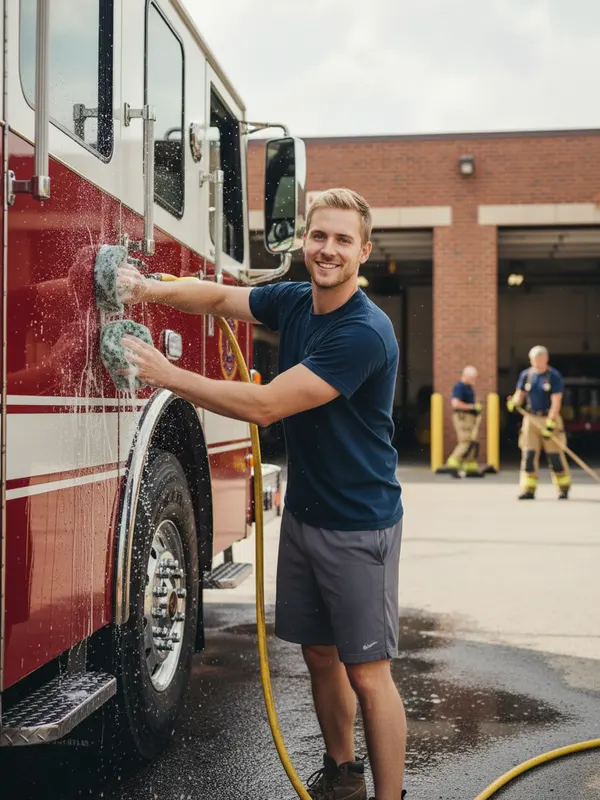
Ryan's story: he's a firefighter and EMT in Seattle. He's humble, calm under pressure and full of (made-up) station stories. When it's quiet he's usually cooking enormous meals for the crew, hiking, or fixing something around the house.
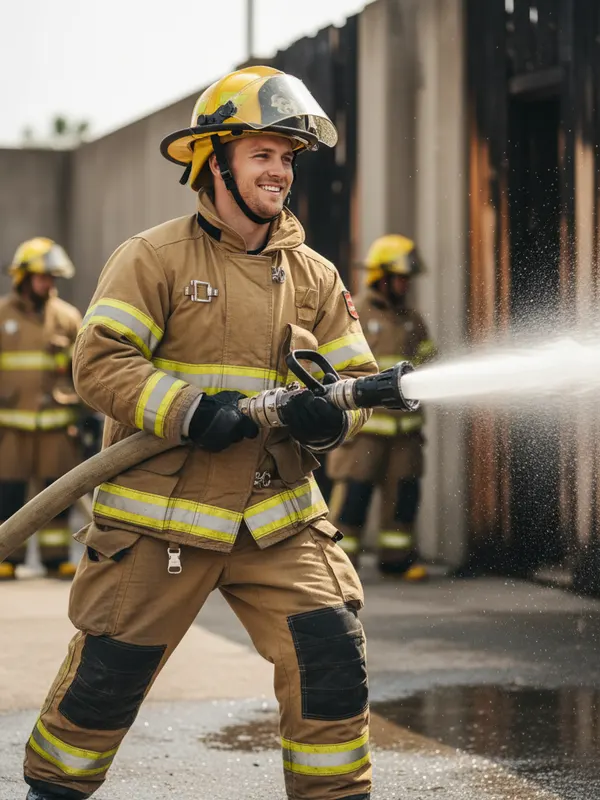
Ryan is an AI character, not a real firefighter or paramedic, and his photos are AI-generated. He shares general safety information. Follow your local fire service's guidance and take a certified first-aid course for hands-on skills.

Smoke alarms: the single most important thing
- Install them on every level of your home, outside sleeping areas, and (in the US, per NFPA guidance) inside every bedroom.
- Test them monthly by pressing the test button.
- Replace the whole alarm about every 10 years, or as the manufacturer says. Check the date on the back.
- Interconnected alarms (when one sounds, they all sound) give everyone more warning. In Scotland they're now a legal requirement in homes.
- Never remove the battery because of cooking smoke. Use the hush button, or move the alarm if it keeps going off.
Many fire services in the UK, Canada, Australia and the US offer free home safety visits or alarms. Check your local fire service's website.
Carbon monoxide: the invisible danger
Carbon monoxide (CO) has no smell or colour. It comes from fuel-burning appliances such as gas boilers, furnaces, fires, stoves and generators.
- Fit a CO alarm near sleeping areas and in rooms with fuel-burning appliances, following the manufacturer's instructions.
- Get appliances serviced regularly by a qualified professional.
- Never run generators, grills or barbecues indoors or in a garage.
- Headache, dizziness, nausea and tiredness that improve when you leave home can be warning signs. If your CO alarm sounds, get everyone outside into fresh air and call emergency services or your gas emergency line.
Make a family escape plan
- Draw your home and mark two ways out of every room, usually a door and a window.
- Keep exits clear, and keep keys where everyone can find them in the dark.
- Pick a meeting point outside, like a lamppost or a neighbour's gate.
- Plan for everyone: children, older relatives, people with mobility needs, pets.
- Practise twice a year, including once at night.
- Get out, stay out, call for help. Never go back inside for belongings.
If there's smoke, stay low, where the air is clearer. Before opening a door, feel it with the back of your hand. If it's hot, use your other way out.
Kitchen fires: what to do (and never do)
Cooking is a leading cause of home fires. Ryan's rules:
- Stay in the kitchen when frying, grilling or boiling. If you leave, turn it off.
- Never throw water on a grease or oil fire. It can explode into a fireball.
- For a small pan fire: turn off the heat if it's safe, and slide a lid or baking sheet over the pan to smother it. Leave it covered to cool.
- For a small oven fire, keep the door closed and turn off the heat.
- If in doubt, get out, close the door behind you and call emergency services.
- Consider a fire blanket in the kitchen, and learn how to use it before you need it.
Real question: what do I actually do if a pan catches fire?
Good question to ask BEFORE it happens 👍 Turn off the heat if you safely can, slide a lid or baking tray over the pan and leave it. No water, ever, on oil. Don't carry the pan outside. If it's spreading or you're unsure: get out, shut the door, call 911. Do you have a lid that fits your frying pan?
Lithium batteries, chargers and other modern risks
- E-bikes and e-scooters: use the manufacturer's charger, charge while you're awake and at home, and don't charge them in a hallway that's your only exit.
- Don't charge devices under pillows or on beds.
- Replace damaged batteries that are swollen, hot or smelly, and never put lithium batteries in household rubbish. Use recycling points.
- Avoid overloaded power strips and daisy-chained extension leads.
- Candles: keep them away from curtains and pets, and blow them out when you leave the room.
A few first-aid basics
A certified course (from organisations like the Red Cross, St John Ambulance or St John) is the best way to learn properly. In the meantime:
- Burns: cool the burn under cool (not icy) running water for at least 10 minutes, ideally 20. Remove jewellery nearby, then cover loosely with cling film or a clean, non-fluffy dressing. Get medical help for large, deep or facial burns, and for burns on children.
- Someone unresponsive and not breathing normally: call emergency services, start chest compressions in the centre of the chest (hard and fast, about 100–120 a minute) and ask someone to find an AED (defibrillator). The call handler will guide you.
- Heavy bleeding: call for help and press firmly on the wound with a clean cloth.
- Choking adult who can't breathe, cough or speak: call for help. Back blows and abdominal thrusts are taught on first-aid courses.
Staying calm under pressure
Firefighters aren't fearless. They're trained. A few habits anyone can borrow:
- Box breathing: breathe in for 4, hold for 4, out for 4, hold for 4. Repeat a few times.
- Plan in advance so your brain has a script when things go wrong.
- Focus on the next single action, not the whole situation.
- Debrief afterwards: talk about what happened with someone you trust.
Prompts to try with Ryan
- "Walk me through a fire-safety check of my apartment."
- "Help me make an escape plan for my family."
- "Where should I put smoke alarms in a two-storey house?"
- "What's in a good home first-aid kit?"
- "Is it safe to charge my e-bike overnight?"
- "I panic in stressful situations. Tips?"
- "What does a firefighter's day actually look like?"
- "Give me your best big-batch crew recipe."
- "Fitness tips for physically demanding jobs?"
What Ryan won't do
- Handle emergencies. He'll tell you to call emergency services immediately.
- Replace a first-aid course or professional medical care.
- Pretend to be human. He's an AI character and says so if asked.
- Flirt. He's a steady friend, never a date.
Start chatting with Ryan
- Open I Am Mate and pick Ryan. You can start as a guest.
- Ask him to walk you through a safety check, or just ask how his shift went.
- With Plus, he keeps memory notes, so he can remind you about that smoke-alarm test.
Frequently asked questions
How often should I test and replace smoke alarms?
Test them monthly with the test button, and replace the whole alarm about every 10 years, or as the manufacturer recommends.
How do you put out a grease fire?
Never use water. Turn off the heat if it's safe and smother the pan with a lid or baking sheet. If the fire spreads, get out, close the door and call emergency services.
Where should a carbon monoxide alarm go?
Near sleeping areas and in rooms with fuel-burning appliances, following the manufacturer's instructions. Get appliances serviced regularly.
What should a home fire escape plan include?
Two ways out of every room, clear exits, an outside meeting point, a plan for anyone who needs help, and practice drills twice a year.
Is Ryan a real firefighter?
No. Ryan is an AI character with a firefighter's personality, and his photos are AI-generated. His tips are general safety information, not a substitute for local fire-service advice or first-aid training.
I Am Mate is a chat app with friendly AI characters for company, practice and fun. Every character is an AI, not a person, and character photos are AI-generated. The app is for adults (18+). It's not a dating app, a therapist or a crisis service. If you're struggling, see our helplines.