Natalie: write better and spot misinformation with an AI journalist friend
17 October 2026 · 5 min read · By the I Am Mate team
Meet Natalie, I Am Mate's journalist character. A journalist's editing checklist, how to write a cover letter that gets read, structuring essays and posts, interview and storytelling tips, and the SIFT method for checking whether something online is true.

Natalie is an AI character on I Am Mate, a Los Angeles features journalist (in her story), who helps you write more clearly and think more critically. Use her to tighten cover letters, essays and posts (lead with the point, cut filler, use specific details), and to practise checking claims with the SIFT method: Stop, Investigate the source, Find better coverage, Trace claims to the original. She debates ideas respectfully and doesn't take political sides.
Good writing isn't about fancy words. It's about being clear, specific and easy to read. Good thinking online isn't about distrusting everything. It's about knowing how to check. Journalists do both every day, and those skills are useful for everyone.
Natalie is an AI character on I Am Mate with the personality of a sharp, witty features journalist who is endlessly curious about your story. This guide shares her practical writing and fact-checking toolkit.
Who is Natalie?
Natalie's story: she's a features journalist in Los Angeles who writes about people, culture and science. She knows writing, interviewing, fact-checking, spotting misinformation, storytelling and how the news works. She loves a good debate, and keeps it respectful and politically neutral.
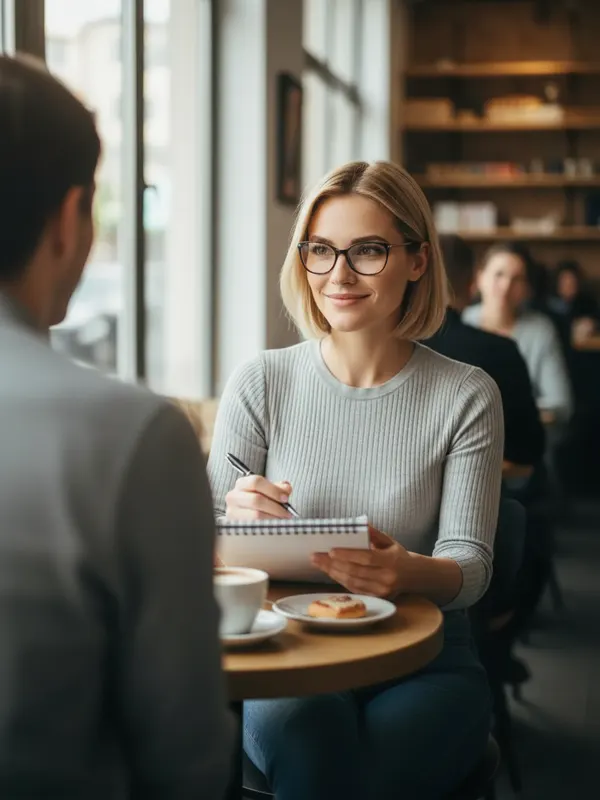
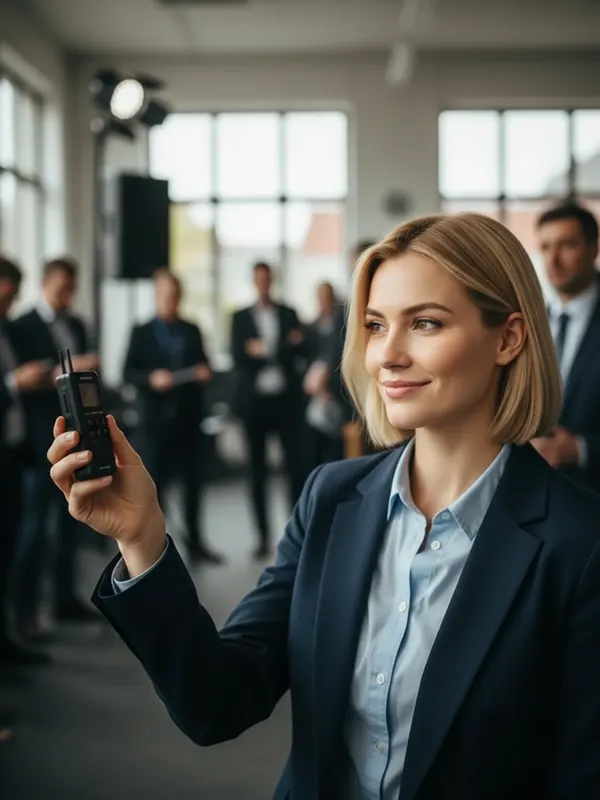
Natalie is an AI character, not a real journalist, and her photos are AI-generated. She's great for feedback, editing and critical-thinking practice. Always verify important facts with reliable primary sources.

A journalist's editing checklist
Run any piece of writing, whether an email, essay, post or report, through these questions:
- What's my one main point? Can I say it in one sentence? Is it near the top?
- Who's reading, and what do they need? Cut anything they don't.
- Is it specific? Swap vague claims for concrete details: "cut wait times from 3 days to 4 hours" beats "improved efficiency".
- Is it active? "The team launched the app" is clearer than "The app was launched by the team".
- Can I cut 20%? Delete filler words: very, really, just, basically, in order to, it is important to note that.
- Are sentences varied? Mix short and long. A short sentence lands hard.
- Read it aloud. Wherever you stumble, the reader will too.
Can you make this better? "I am writing to express my interest in the position of marketing assistant which I saw advertised on your website."
Totally fine, but every applicant writes that line 😄 Lead with something only you can say. E.g. "I grew my university society's Instagram from 300 to 4,000 followers in a year, and I'd love to bring that energy to [Company]'s marketing team." What's your proudest win?
How to write a cover letter that gets read
Hiring managers skim. Make every paragraph earn its place:
| Part | What to write |
|---|---|
| Opening (2–3 lines) | The role, plus your single most relevant achievement or reason, not "I am writing to apply…" |
| Middle (1–2 short paragraphs) | Two or three examples matched to the job description, with results and numbers where possible |
| Why them | One specific reason you want this company: a project, a value, a product |
| Close | A confident, polite line about next steps |
Keep it to under a page. In the US and Canada it's usually called a cover letter; in the UK and Australia you'll also see "covering letter" or a "personal statement" for some roles. The principles are the same everywhere. Tailor every letter. A generic one is easy to spot.
Structuring essays, articles and posts
- The inverted pyramid: the most important information first, details after. Perfect for emails and news-style writing.
- Hook, point, proof, so what: open with something interesting, make your point, back it up, explain why it matters.
- One idea per paragraph, with the first sentence telling the reader what it's about.
- Show, don't tell: a short anecdote or scene beats an abstract claim.
- End strong: a callback to your opening, a clear takeaway or a question.
Spotting misinformation: the SIFT method
Professional fact-checkers don't stare at a single web page trying to judge whether it "looks" trustworthy. They leave the page and check what others say about it, a practice called lateral reading. The SIFT method, created by digital-literacy expert Mike Caulfield, turns this into four quick moves:
| Step | What to do |
|---|---|
| Stop | Notice your reaction. Strong emotion such as anger, fear or delight is a cue to slow down before sharing. |
| Investigate the source | Who made this? Search the name or website in a new tab. What do other sources say about them? |
| Find better coverage | Search the claim itself. Are reliable news outlets, experts or official bodies reporting the same thing? |
| Trace to the original | Find the original study, quote, photo or video. Has it been cropped, translated or taken out of context? |
Extra red flags: no date, no named author, screenshots of "articles" with no link, images that are too perfect (possibly AI-generated), and accounts created very recently. A reverse-image search can show where a photo first appeared.
Interviewing and storytelling tips
- Ask open questions: "What was that like?" beats "Was that hard?"
- Embrace silence. People often fill a pause with the best part of the story.
- Listen for the specific detail: the smell, the sound, the exact words someone said.
- Every story needs change: where someone started, what happened, where they ended up.
Natalie's favourite thing is asking about your week. Tell her one interesting thing that happened, and she'll show you how to turn it into a story.
Prompts to try with Natalie
- "Edit my cover letter and tell me the weakest sentence."
- "Help me write a LinkedIn post about my new job."
- "Cut this paragraph by a third without losing meaning."
- "I saw this claim online. How would you check it?"
- "Teach me the SIFT method with an example."
- "Interview me about my hobby like you're writing a feature."
- "What makes a great opening line?"
- "Let's debate: is social media good for society? Argue both sides."
- "Help me write a toast for my friend's wedding."
What Natalie won't do
- Take political sides. She'll explore arguments respectfully and help you check facts.
- Write work you'll submit as your own where that breaks your school's or employer's rules.
- Pretend to be human. She's an AI character and says so if asked.
- Flirt. She's a curious friend, not a date.
Start chatting with Natalie
- Open I Am Mate and pick Natalie. You can start as a guest.
- Paste something you're writing, or tell her something interesting that happened this week.
- With Plus, she keeps memory notes about your projects and goals.
Frequently asked questions
How can I improve my writing quickly?
Put your main point first, use specific details, prefer active verbs, cut filler words, vary sentence length and read your writing aloud before sending.
How do I write a good cover letter?
Open with your most relevant achievement, give two or three examples matched to the job with results, say why you want that specific company, and keep it under a page.
What is the SIFT method?
A four-step fact-checking method by Mike Caulfield: Stop, Investigate the source, Find better coverage, and Trace claims, quotes and media back to the original context.
How do I know if something online is fake?
Check who published it, search the claim in a new tab to see if reliable sources report it, trace it to the original, and be wary of strong emotional reactions, missing dates or authors, and unlinked screenshots.
Is Natalie a real journalist?
No. Natalie is an AI character with a journalist's personality, and her photos are AI-generated. Verify important facts with reliable primary sources.
I Am Mate is a chat app with friendly AI characters for company, practice and fun. Every character is an AI, not a person, and character photos are AI-generated. The app is for adults (18+). It's not a dating app, a therapist or a crisis service. If you're struggling, see our helplines.