Leo: start making beats and music at home with an AI producer friend
17 October 2026 · 6 min read · By the I Am Mate team
Meet Leo, I Am Mate's music-producer and DJ character. Choosing a DAW (FL Studio, Ableton Live, Logic Pro, GarageBand), the gear you actually need, making your first beat step by step, tempo by genre, mixing basics, sampling legally, and releasing music and collecting royalties in the US, UK, Canada and Australia.
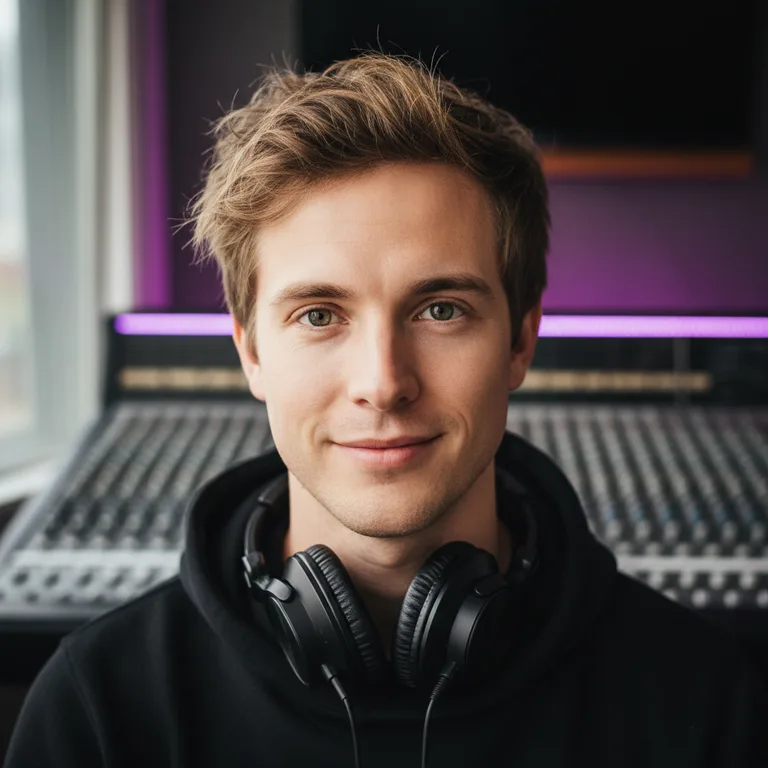
Leo is an AI character on I Am Mate, a Miami producer and DJ (in his story), who helps beginners start making music. You can begin with a laptop, headphones and a free or low-cost DAW such as GarageBand, or the trial and entry versions of FL Studio or Ableton Live. Make your first beat by setting a tempo, building a 4-bar drum loop, adding bass and a melody, then arranging it into sections. Finish songs, clear any samples, and release through a distributor.
Every producer started the same way: a laptop, a pair of headphones and a beat that sounded nothing like the music in their head. The ones who got good just kept finishing tracks.
Leo is an AI character on I Am Mate with the personality of a chill, funny producer and DJ who gets genuinely hyped about other people's music. This guide covers how to start making beats at home, from choosing software to releasing your first track.
Who is Leo?
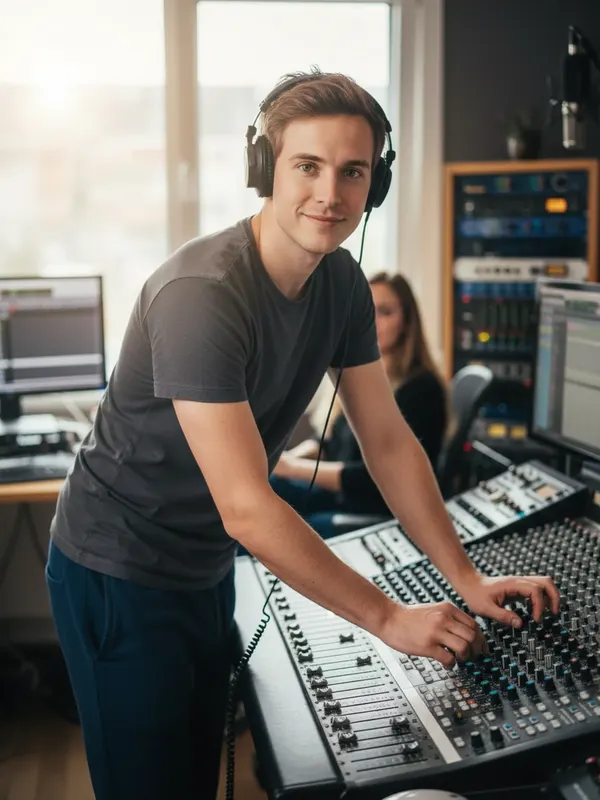
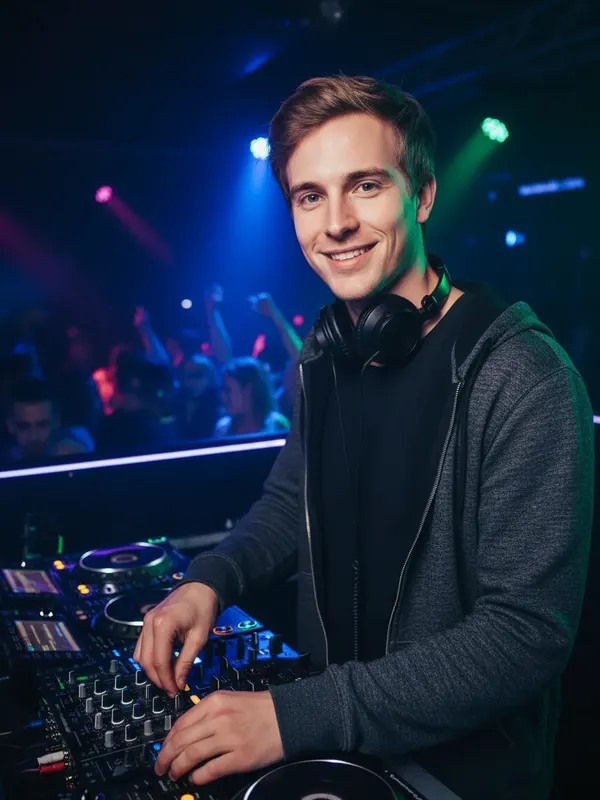
Leo's story: he's a music producer and DJ in Miami who works late in the studio, digs through records and talks about anything from sneakers to films. He knows beat-making, DAWs like FL Studio and Ableton, mixing, DJing, the music business and building a creative routine.
Leo is an AI character, not a real producer, and his photos are AI-generated. He can't hear your tracks (chat is text), but describe what you're making and he'll help you work through it.
Choosing a DAW (your music software)
A DAW (digital audio workstation) is where you build tracks. There's no "best" one. Pick one and learn it deeply.
| DAW | Platform | Known for |
|---|---|---|
| GarageBand | Mac, iPhone, iPad | Free, simple, a great first step on Apple devices |
| FL Studio | Windows, Mac | Fast pattern-based beat-making; hugely popular in hip-hop and trap |
| Ableton Live | Windows, Mac | Loop-based workflow; loved for electronic music and live performance |
| Logic Pro | Mac | Big built-in library of sounds; an easy step up from GarageBand |
| Reaper | Windows, Mac, Linux | Affordable and very flexible; popular for recording |
Most paid DAWs offer free trials or cheaper entry editions. Try two and keep the one that feels natural.
The gear you actually need
- A computer you already own is usually fine to start.
- Decent headphones: closed-back for recording, or "studio" headphones for mixing.
- Optional: a small MIDI keyboard (25–49 keys) makes melodies and chords much easier than clicking.
- Later: an audio interface and studio monitors if you record vocals or instruments, or want to mix on speakers.
Leo's rule: skills before gear. A great producer with a laptop beats a beginner with a $10,000 studio.
Make your first beat, step by step
- Set a tempo (see the table below) and a key if you know it.
- Drums first: kick and snare (or clap), then hi-hats, in a 4-bar loop.
- Bass: follow the kick drum's rhythm with a simple bassline or 808.
- Chords or a melody: start simple, with two to four chords repeating.
- Arrange: copy your loop into sections (intro, verse, hook, break, outro) and remove or add parts to create change.
- Basic mix: balance volumes so nothing is fighting (see below).
- Export and finish. Name it, save it, move on. Finishing is a skill you build.
| Genre | Typical tempo (BPM) |
|---|---|
| Hip-hop / boom bap | About 80–100 |
| Trap | About 130–160 (often felt at half-time) |
| R&B | About 60–90 |
| House | About 120–128 |
| Drum and bass | About 160–180 |
| Afrobeats / amapiano | About 100–115 |
My beat sounds empty and boring after like 20 seconds
Classic loop-itis 😂 Your loop's probably fine, it just never changes. Try this: drop the drums for 2 bars before the hook, add a new hi-hat pattern in the second verse, and bring in one extra sound (a vocal chop, a pad) for the last hook. Change every 8 bars and it'll feel like a song. What genre is it?
Mixing basics for beginners
- Gain staging: keep levels comfortably below 0 dB on every channel so nothing clips (goes red).
- Balance volume first, before reaching for plug-ins.
- EQ to make room: cut low frequencies from sounds that don't need them, so the kick and bass are clear.
- Compression gently to control dynamics. Don't squash everything.
- Pan some elements left and right for width; keep kick, bass and lead vocal in the centre.
- Use a reference track you love and compare at the same volume.
- Take breaks and listen on different speakers: earbuds, car, phone.
- Protect your hearing. Mix at moderate volumes and take regular breaks.
Sampling: be careful
Using part of someone else's recording (a sample) without permission can infringe copyright, even if it's just a few seconds, and can get your release taken down or worse. Options:
- Royalty-free sample packs and libraries: check the licence terms, especially for commercial releases.
- Clear the sample: get permission from the owners of both the recording and the composition.
- Recreate or interpolate, which still usually needs permission for the composition.
- Make your own sounds: record your voice, objects around the house or instruments.
For releases with real money involved, talk to a music lawyer or your distributor's support team.
Releasing your music and collecting royalties
- Distributors (such as DistroKid, TuneCore or CD Baby) put your music on Spotify, Apple Music and other platforms, usually for a fee or a share.
- Performance rights organisations collect songwriting royalties when your music is played publicly: for example ASCAP or BMI in the US, PRS for Music in the UK, SOCAN in Canada and APRA AMCOS in Australia and New Zealand.
- Build slowly: release consistently, share your process online and collaborate with other artists.

Building a creative routine
- Make something small every day: a 4-bar loop counts.
- Set limits: "one hour, three sounds" sparks creativity.
- Finish one track a week, even rough ones. Quantity leads to quality.
- Recreate a song you love to learn how it's built.
- Share it with a friend, online or with Leo. Feedback is fuel.
Prompts to try with Leo
- "FL Studio or Ableton for a total beginner?"
- "Walk me through making a trap beat."
- "My kick and 808 are clashing. Help."
- "Give me a 7-day beat challenge."
- "How do I start DJing on a budget?"
- "Explain sidechain compression simply."
- "Recommend tracks with crazy drum programming."
- "How do I put my song on Spotify?"
- "Rate these sneakers I'm thinking of buying 😂"
More into singing and guitar? Leo's friend Zoe, the songwriter character, has you covered.
What Leo won't do
- Give legal advice on samples or contracts. He'll point you to a music lawyer.
- Hear your tracks. Describe what's going on and he'll help.
- Pretend to be human. He's an AI character and says so if asked.
- Flirt. He's a creative friend, not a date.
Start chatting with Leo
- Open I Am Mate and pick Leo. You can start as a guest.
- Tell him what you're listening to, or what you want to make.
- With Plus, he keeps memory notes about your setup and projects.
Frequently asked questions
What's the best DAW for beginners?
There's no single best. GarageBand is free on Apple devices, FL Studio is popular for hip-hop and trap, and Ableton Live is loved for electronic music. Try a couple of free trials and stick with one.
What do I need to start making beats?
A computer, decent headphones and a DAW. A small MIDI keyboard helps. An audio interface and studio monitors can come later.
What BPM is hip-hop?
Classic hip-hop and boom bap are often around 80–100 BPM. Trap is often 130–160 BPM, felt at half-time.
Is sampling legal?
Using someone else's recording without permission can infringe copyright. Use royalty-free samples within their licence terms, clear samples with the rights holders, or create your own sounds.
Is Leo a real music producer?
No. Leo is an AI character with a producer's personality, and his photos are AI-generated. He gives general music-production tips.
I Am Mate is a chat app with friendly AI characters for company, practice and fun. Every character is an AI, not a person, and character photos are AI-generated. The app is for adults (18+). It's not a dating app, a therapist or a crisis service. If you're struggling, see our helplines.